

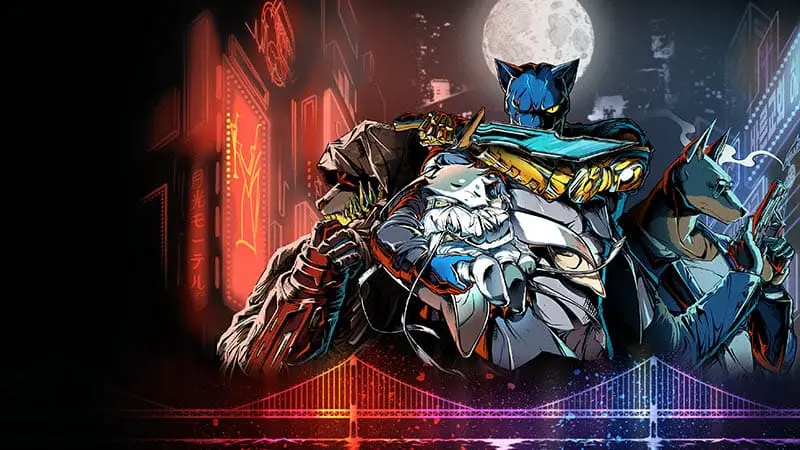
Kusan: City of Wolves wears its Hotline Miami influence openly, but it does not spend long living in someone else’s shadow. Its top-down perspective, instant deaths and compact combat rooms are familiar, yet the game quickly builds its own identity through a mechanical arm, a returning throwing knife and a flexible upgrade system.
The result is a violent action game that rewards quick reactions, but it is not purely about speed. The best runs come from reading a room, deciding which enemy needs to die first and linking several tools together without losing momentum.
Every Room Is a Small Combat Puzzle
Jin, a former soldier now working in the streets of Kusan, can kill most enemies with a single clean attack. The same rule applies to him, which means careless movement usually ends a run immediately.
Thankfully, restarts are fast. Death rarely creates a long interruption, so repeating the same room feels more like solving a problem than waiting through a punishment screen. Each failure reveals something useful: a hidden gunman, a dangerous angle or a better route through the room.
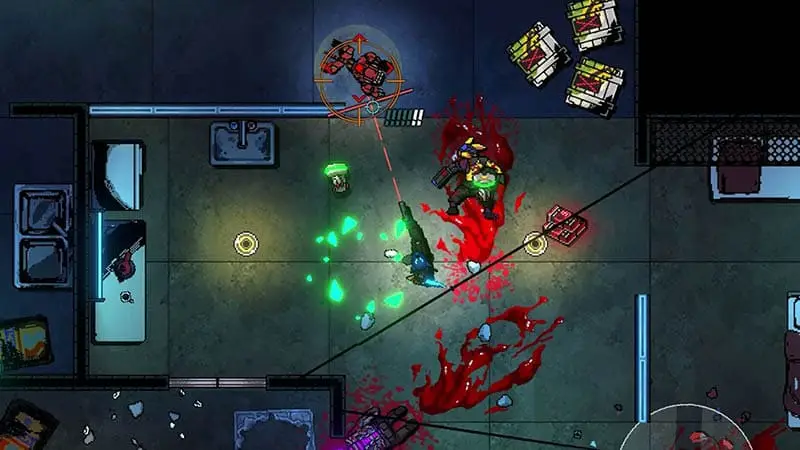
Jin’s War Hand handles close-range attacks and can also throw objects or enemies across the environment. His Quantum Knife automatically targets nearby threats and can be collected again after use. Firearms provide safer kills at a distance, while parrying gives players another answer to incoming attacks.
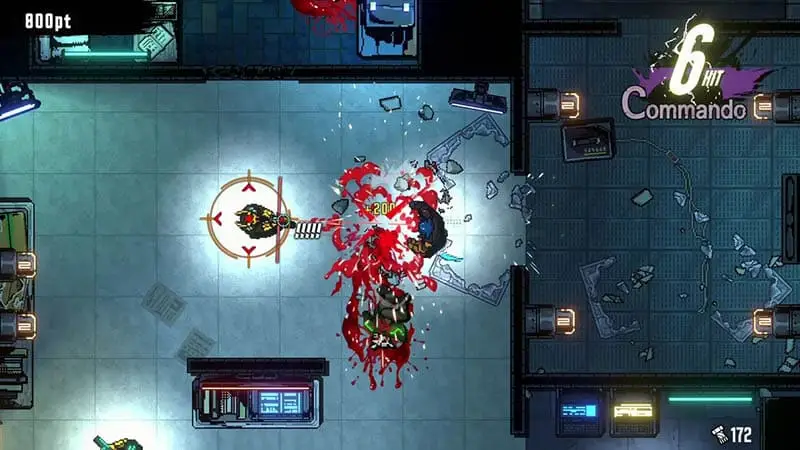
These tools work best when combined. A typical encounter might begin with a thrown knife, continue with a punch that launches one enemy into another and end with a stolen weapon clearing the far side of the room. The game rarely forces one exact solution, which keeps familiar situations from becoming too rigid.
Upgrades Add Meaningful Choice
Completing stages earns Bolts that can be spent on new weapons and abilities. Upgrades are placed onto a limited circuit board, so players cannot simply equip every useful bonus at once.
This system creates real decisions. A larger or more powerful upgrade may take up valuable space that could otherwise hold several smaller improvements. Players can build around aggressive melee attacks, safer ranged combat or a balanced mixture of both.
More importantly, upgrades often change how a tool behaves rather than providing a small numerical increase. That makes experimentation worthwhile and gives players another reason to revisit earlier stages.
Difficulty Can Become Frustrating
Kusan: City of Wolves is intentionally demanding. There are no major difficulty assists to soften the one-hit death system, and some sections require several attempts before the enemy layout becomes clear.
Most of the challenge feels fair, but not all of it. Jin can occasionally catch on doors, furniture or other environmental objects during frantic moments. In a game built around constant movement, even a brief obstruction can feel especially irritating.
The parry system is another uneven element. It becomes useful once the timing starts to make sense, but the game does not explain it particularly well. Early attempts can feel inconsistent, and players may spend more time guessing than learning.
Visual clarity also suffers during the busiest encounters. Blood, gunfire, enemies and environmental objects can overlap, making it difficult to identify the most immediate threat. The confusion fits the chaotic tone, although it sometimes pushes the challenge away from precision.
Story and Presentation
The story follows Jin as he becomes responsible for protecting Haru, a young girl carrying a weapon capable of destroying the city. His mission reconnects him with former soldiers and a wider conflict involving Kusan’s violent post-war politics.
Comic-style cutscenes give the narrative a strong visual identity. The artwork looks sharp, and the setting has enough personality to make the journey feel more substantial than a simple series of combat arenas.
Still, the plot rarely becomes the main reason to continue. Some scenes interrupt the fast pace, while parts of the story can be difficult to follow. The action remains far more memorable than the characters explaining why the next group of enemies needs to disappear.
The pixel art is consistently strong. Animations are quick, brutal and easy to read during calmer moments. Loptimist’s hip-hop soundtrack gives the city a distinct mood, even if the music often stays more controlled than the aggressive action might suggest.
Content and Replay Value
The campaign contains 54 hand-crafted stages and takes roughly eight hours to complete, depending on skill. Most stages are short enough for portable sessions, making the Nintendo Switch a natural home for this structure.
Performance rankings encourage replaying missions for cleaner and faster clears. Better grades require more than simply reaching the exit; players need to maintain momentum and use their abilities efficiently.
The upgrade system, score chasing and different approaches to combat provide solid replay value. Players who enjoy mastering stages may spend far longer with the game than those mainly interested in finishing the story.
Kusan: City of Wolves Review Verdict
Kusan: City of Wolves takes a recognisable formula and gives it enough new ideas to avoid feeling like a copy. Its best moments come from chaining several attacks together and clearing a room before the enemies have time to react.
The loose environmental collision, unclear parry timing and occasional visual clutter can make the difficulty feel harsher than intended. Even so, the core combat is quick, flexible and satisfying enough to survive those frustrations.
For players who enjoy short levels, instant restarts and the pursuit of better scores, Kusan: City of Wolves is an easy recommendation. It is violent, focused and confident enough to leave its own mark on the genre.
Score: 8/10
Pros
- Fast and flexible combat
- Strong weapon combinations
- Meaningful upgrade system
- Excellent pixel-art animation
- High replay value
Cons
- Parry timing is poorly explained
- Environmental objects can block movement
- Busy encounters become difficult to read
- Limited accessibility options

