


Hollow Knight: Silksong isn’t a game where you just “open the map, plot a route, oh how nice.” From the very first minute, she waves, “You don’t have a map, goodbye.” Seeing the map, tracking yourself, marking safe spots… they’re all luxuries you buy in the game. That’s why collecting the map early and deciphering the secret passage language makes the game feel incredibly relaxing. (Yes, it’ll hurt your wallet a bit. Yes, it’s worth it.)
Below, I explain everything, from how to open the map and where to find Shakra, to the logical order of visiting areas and the logic behind breakable walls/secret passages.
1) How Does the Map System Work?
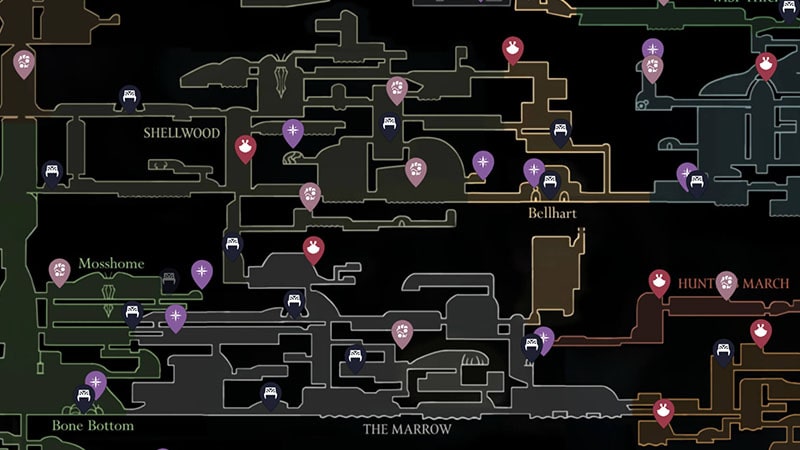
Hollow Knight: Silksong deviates slightly from the “auto-map-filling” metroidvanias. You purchase maps for each area yourself, which forces you to find the map merchant, Shakra. Think of Shakra as Silksong’s version of Cornifer from the first game.
What you can get from Shakra:
- Area maps (The Marrow Map, Mosslands/Moss Grotto, etc.)
- Quill : Allows you to draw new rooms you visit on your own map.
- Compass: Answers to the question “where am I?” on the map. (Getting lost without it is guaranteed.)
- Pin/Marker Packs: Marks benches, bellways (fast travel bells), merchants, and other critical points.
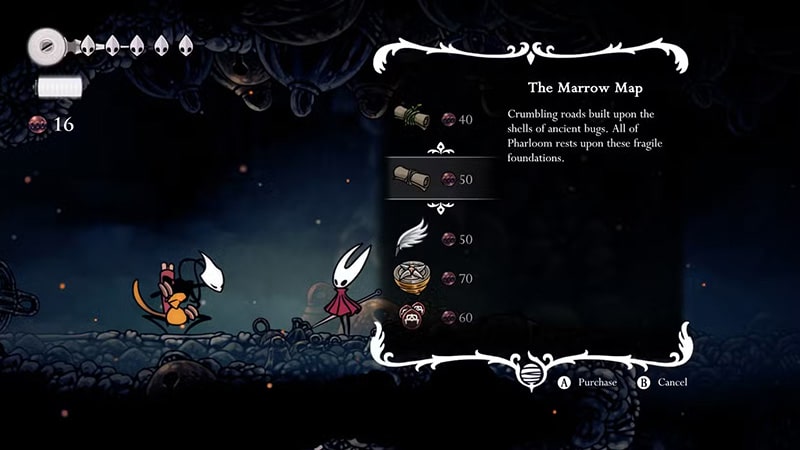
- The crucial lesson here: If you don’t get these tools early, the game deliberately lets you down. Your location isn’t automatically displayed at the start; figuring out where you are without Compass is a real pain. So, as soon as you see Shakra, grab whatever Rosary you have and grab the Map + Quill + Compass combo. You bury the money once, then as you travel, Quill adds new rooms and the world becomes readable.
2) Who is Shakra and Why is She So Important?

Shakra isn’t a fixed shop; she’s a roaming cartographer/merchant. Depending on your progression, she moves to different areas. Clear a region and she can go, “welp, I’m out,” and relocate. So don’t expect to find her in the same room every time.
Good news: you’re not doomed if you missed her and didn’t buy the map. You can go back to Bone Bottom and summon Shakra back. Climb to certain platforms in the settlement and smack the golden ringed post—Shakra reappears and sells you the map you missed. The game doesn’t fully punish you for sprinting around mapless; there’s a way to make up for it.
Why does this mechanic matter? Because Silksong’s regions are linked by vertical transitions and secret paths. If you skip a map, you might accidentally drop into the next area and wander around blind for hours. The recall system fixes exactly that.
3) Where Do I Find Shakra? (Early Game Onward)
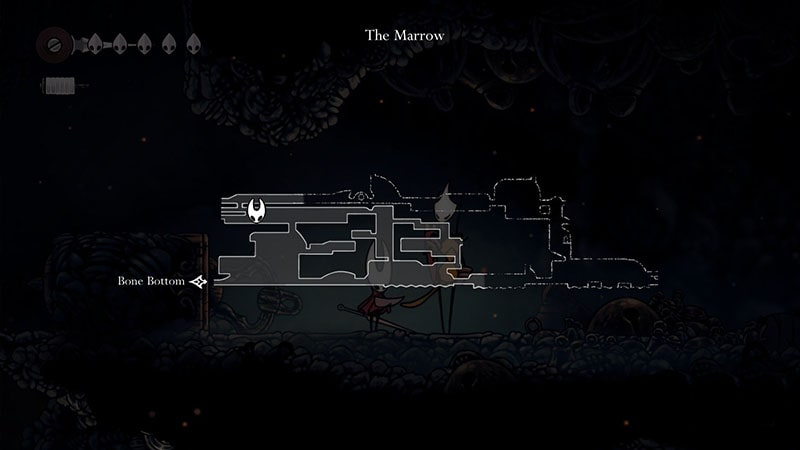
The route below matches the natural flow for a new player. Shakra shows up in these regions and sells maps/Quill/Compass for Rosaries:
The Marrow
You usually meet Shakra here first. While roaming a large room you’ll hear her humming. From here you can buy The Marrow Map and the first maps for the Mosslands/Moss Grotto side. Key tools like Quill and Compass also typically unlock here.
Bone Bottom / Moss Grotto
Bone Bottom is a small settlement. Shakra can show up here too; especially after Bell Beast, there’s a spot up on the platforms where you can summon her. You can make up for missed maps by buying them here.
Deep Docks
Head right from The Marrow and you reach an area with a more industrial vibe. You’ll usually find Shakra near a Bellway. Here she asks Rosaries for the Deep Docks map.
Far Fields / Greymoor / Shellwood / Bellhart / Wormways
As you progress, Shakra “follows” you into new regions. You’ll see her again in open places like Far Fields, higher-level areas like Greymoor, and later in tougher zones like Shellwood and Bellhart. She sells a new map for each region, giving you controlled insight into “where you’re headed, which shortcuts you opened, which boss route got locked,” and so on.
In short, Shakra is the game’s navigation backbone. Visit her regularly, collect maps completely, and grab Compass/Quill early—exploration becomes a breeze.
4) Region Order Logic (Natural Flow)
Hollow Knight: Silksong isn’t a straight corridor; regions connect with up/down and lateral transitions. Still, most players flow like this:
- Moss Grotto / Mosslands → Essentially the start; organic and leafy. A warm-up for movement and combat.
- The Marrow → Enemies hit harder, and one of the first real bosses (Bell Beast) is here. You also assemble your mapping setup (map/Quill/Compass) here.
- Deep Docks → Armored foes, tight platforms, wide horizontal layouts. Bellway fast-travel points become more visible here.
- Far Fields / Greymoor / Shellwood / Bellhart / Wormways → Mid–late game. Enemies are dangerous and maps get more vertical. Secret passages, side paths, and breakable walls matter much more. If you don’t learn to read hidden rooms, you’ll flip to “I’m lost, please help.”
5) Secret Rooms, Breakable Walls, and Shortcuts
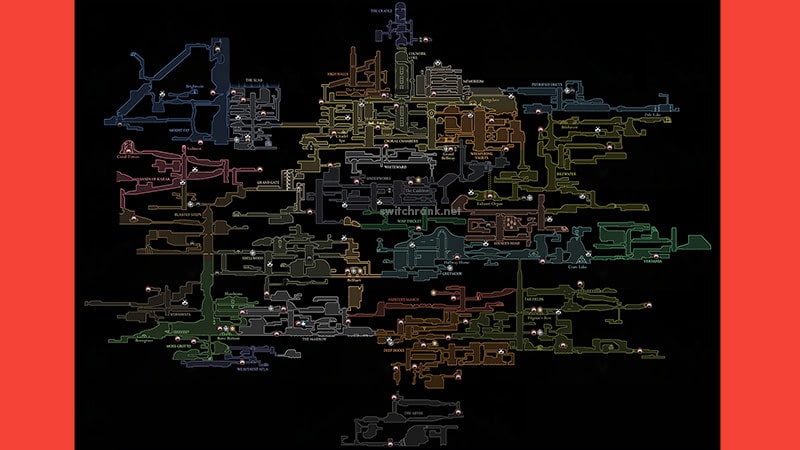
Hollow Knight: Silksong is generous with exploration rewards. Some rooms have fake walls, thin cracks, or stone textures that scream “off.” Break them—hidden rooms open up.
Example:
In Wormways (one of the connections out of Moss Grotto), you drop into a water-filled pit. Break the right wall for a Mask Shard (extra health piece). Sometimes you’ll need movement abilities like Swift Step to open it.
Secret passages don’t just hand you upgrades; they can also unlock new routes. So it’s more than “I grabbed some loot”—it’s also “if I die, my return trip is faster.” Especially in places like Blasted Steps, you pull levers to open elevators and set up those one-way, “unlock-from-the-inside” shortcuts.
Practical trio:
- Big room, tiny texture discrepancy on a wall? Hit it.
- Floor looks thinner than usual? Jump on it—sometimes it collapses.
- Faint wind/whistling but no visible exit? There’s a tunnel.
Learn these reflexes early and life’s a party.
6) Rest Spots, Fast Travel, and Why You Should Mark Them on the Map
Two flavors of safe zones are lifesavers in Silksong:
Bench / Bank / Rest Spots
Heal up, tweak your loadout, sometimes update your map. In some areas just reaching a bench feels like a mini checkpoint.
Bellway (Fast-Travel Bells)
Fast travel between regions. In Deep Docks, Bellways are a blessing—the area is wide horizontally and backtracking is a slog. With Shakra’s pin packs you mark these on your map and plan “I’ll warp from here.”
Marking both types on the map is a must. The world is single-piece but complex; seeing “how many screens to the next safe place?” keeps the pacing sane.
7) 100% Completion and the Map’s Role
Silksong lovingly nurtures your map obsession. If you’re chasing 100%, the map isn’t just for navigation—it’s your checklist.
Your tracking list:
- Mask Shard pieces (permanent health increases)
- Special tools / movement abilities (e.g., Swift Step for mobility)
- Regional bosses and mini-boss rooms (e.g., Bell Beast, Moorwing that unlock areas)
- Every map sold by Shakra (often tied to “Cartographer”-style achievements/total map count, etc.)
| Region | Where’s Shakra? | Key Upgrade | Required Movement |
|---|---|---|---|
| Wormways | Near recall point/side gateways | Mask Shard | Swift Step (example) |
| Deep Docks | Around the Bellway | Shortcut/route mechanisms | None/basic |
| The Marrow | First encounter areas | Quill/Compass access | None |
(Note: Expand the table based on your own discoveries; players searching for “Wormways mask shard location” land right where you want them.)
8) Quick Tips for New Players

- The moment you see Shakra: buy Map + Quill + Compass. Spend the money, skip the getting-lost.
- After finishing a region, swing by Bone Bottom: recall and buy any missed maps.
- Mark Bellway and Bench with pins: spare yourself painful backtracking.
- Wall cracked? Texture sus? Floor thin? Hit/jump. Especially in Wormways and Blasted Steps, hidden rooms often give straight health upgrades.
- 100%-ing isn’t just a compulsion; extra mask pieces noticeably smooth out the difficulty curve.
(Bonus tip: If you can’t see yourself on the map and start spiraling into “who am I, where am I, why am I a bug,” just equip Compass and breathe.)
Conclusion
The mapping side of Silksong isn’t simple, but it’s hugely rewarding. The game deliberately says: “Get lost first, then learn the way yourself.”
- Buy maps,
- Trace your path with Quill,
- See your location with Compass,
- Crack breakable walls to open hidden rooms,
- Set up shortcuts and mark Bellways.
Do that and you’ll turn into a hunter who knows the world like the back of their… claw. Being good at Hollow Knight: Silksong isn’t just about fighting; it’s about reading the geography.

