

The best arcade games on Nintendo Switch and Switch 2 are not limited to old collections or quick nostalgia trips. The system now has fast fighting games, demanding shoot ’em ups, chaotic local co-op releases and score-based action games that still feel built around the simple idea of playing one more round.
Some of these games recreate arcade classics with useful modern features, while others take the same fast and replayable structure in a completely new direction. Whether you want a difficult solo challenge or something everyone can understand within a few minutes, these are ten arcade games worth playing in 2026.
Ninja Gaiden: Ragebound
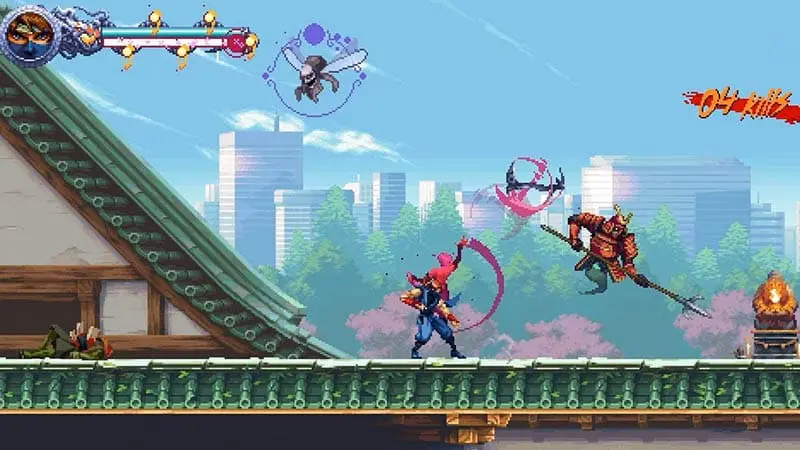
Ninja Gaiden: Ragebound brings the series back to side-scrolling action without feeling trapped by the design of its earliest games. The controls are immediate, attacks connect with a satisfying sense of impact, and most stages are built to keep you moving rather than slowly clearing one enemy at a time.
Kenji Mozu focuses on close-range combat, while Kumori adds new movement options and ninja tools through the game’s fusion system. Hypercharge attacks also encourage you to identify enemies quickly instead of swinging at everything in the same way. The detailed pixel art looks sharp in handheld mode, but it is the precise difficulty that makes Ragebound so easy to replay. Mistakes usually feel understandable, so returning to a stage is less frustrating than it sounds.
Marvel vs. Capcom Fighting Collection: Arcade Classics
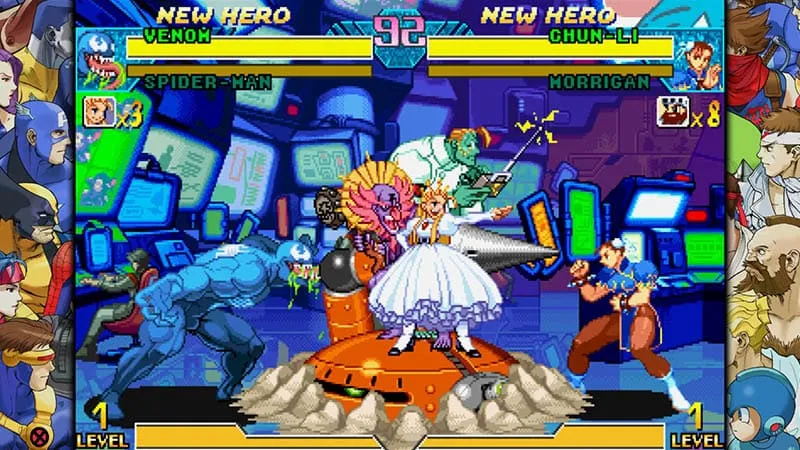
Marvel vs. Capcom Fighting Collection is one of the easiest recommendations for anyone who wants several different styles of arcade fighting in one place. Its seven-game lineup follows the crossover series from X-Men: Children of the Atom to Marvel vs. Capcom 2, with The Punisher included as a welcome beat ’em up break between fighting games.
The older entries feel more deliberate, while Marvel vs. Capcom 2 turns the screen into a storm of assists, projectiles and three-character teams. Adjustable difficulty, training tools, one-button special moves and save features make the collection far friendlier than playing the original arcade versions without removing their competitive depth. Online play also gives the package a purpose beyond local matches and historical curiosity.
Contra: Operation Galuga
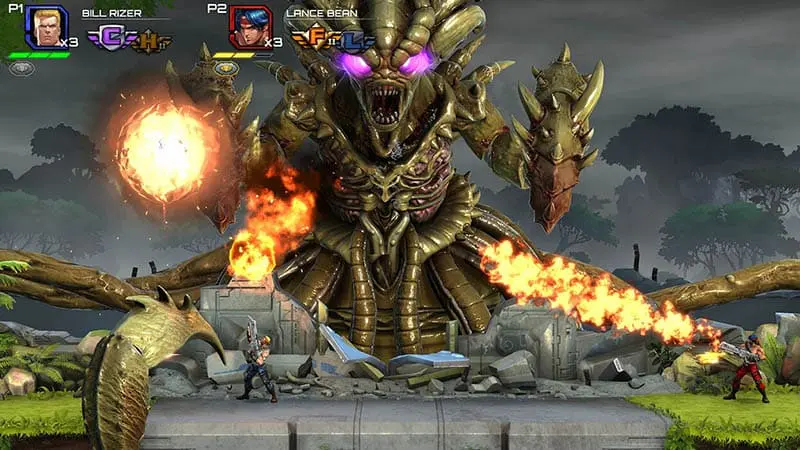
Contra: Operation Galuga takes the basic structure of the original Contra and expands it into a larger, more varied run-and-gun game. It still revolves around sprinting forward, avoiding enemy fire and destroying anything that moves, but stages now contain additional routes, cinematic set pieces and much larger boss encounters.
The weapon system gives each gun multiple power levels, while Overload abilities let you sacrifice a weapon for a powerful temporary effect. That decision becomes especially important when the screen is already crowded with enemies. Story Mode supports two players, and Arcade Mode allows up to four locally, making Galuga far more entertaining with a full group. It may not be the most polished Switch release on this list, but its pace and co-op chaos fit the arcade format perfectly.
Guilty Gear -Strive- Nintendo Switch Edition
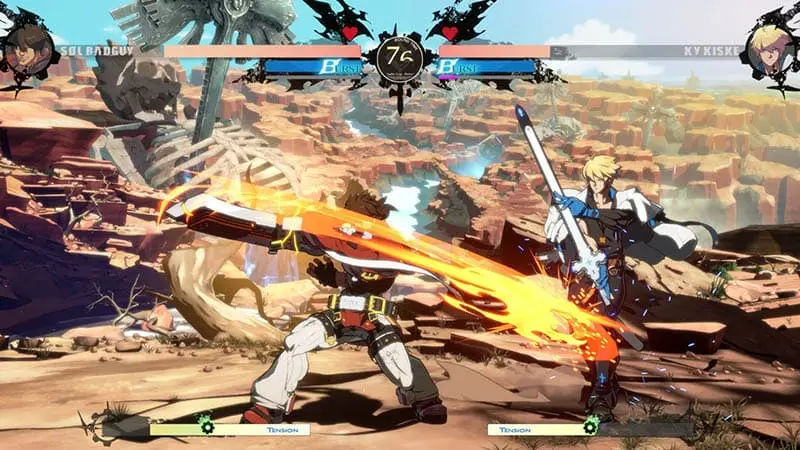
Guilty Gear -Strive- is much easier to understand than its explosive anime presentation suggests. Matches are aggressive, individual hits carry real weight, and the wall-break system prevents players from spending an entire round trapped in one corner.
The Roman Cancel mechanic is where the deeper side of the combat begins to appear. It can extend combos, interrupt your own movement or create enough space to survive an opponent’s attack. Characters also follow completely different game plans, so switching from Sol to Zato or Potemkin feels closer to learning another game than choosing a new costume.
The Nintendo Switch Edition launched with 28 characters and preserved the game’s fast battle system despite the less powerful hardware. Rollback netcode supports online matches, although the Switch version does not share cross-play with the other platforms.
Street Fighter 30th Anniversary Collection
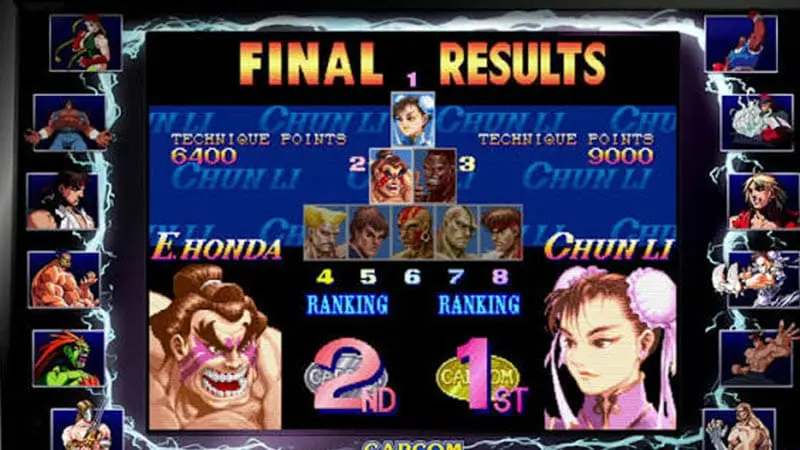
Street Fighter 30th Anniversary Collection is not the newest fighting package on Switch, but very few collections show the development of an entire genre this clearly. Its 12 games cover the original Street Fighter, several Street Fighter II versions, the Alpha series and all three Street Fighter III releases.
The differences are larger than they first appear. Alpha 3 is quick and flexible, Street Fighter II remains more measured, and Third Strike builds much of its identity around the parry system. Moving between them reveals how much the series changed its timing, movement and defensive options over the years.
Only four games support online play, so newer Capcom collections are more convenient in that area. Even so, the arcade versions, local multiplayer and museum material still make this a valuable package.
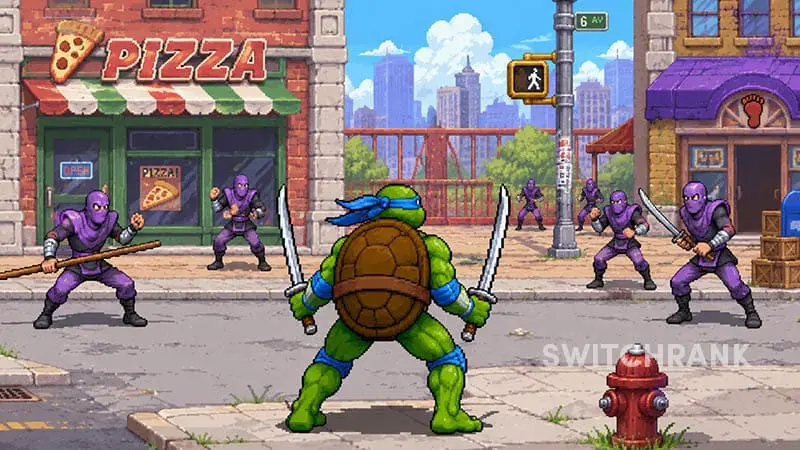
Teenage Mutant Ninja Turtles: Shredder’s Revenge
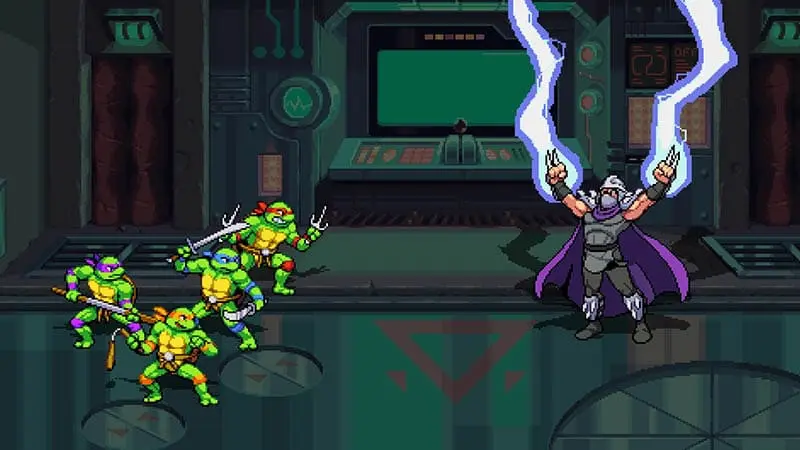
Shredder’s Revenge understands that a beat ’em up needs more than recognizable characters and colourful pixel art. Movement is fast, attacks can be linked naturally, and each playable fighter has noticeable differences in reach, speed and power.
Dodges, aerial attacks and charged moves keep combat from becoming a one-button routine. Story Mode adds progression and optional objectives, while Arcade Mode removes those comforts and turns the game into a more traditional limited-life challenge. Up to six people can play together, although the screen becomes wonderfully ridiculous once everyone starts attacking at the same time.
Additional characters and the Dimension Shellshock survival mode have also given the game more variety since launch. For local multiplayer, it remains one of the safest choices among the best arcade games on Nintendo Switch and Switch 2.
Super Monkey Ball Banana Mania
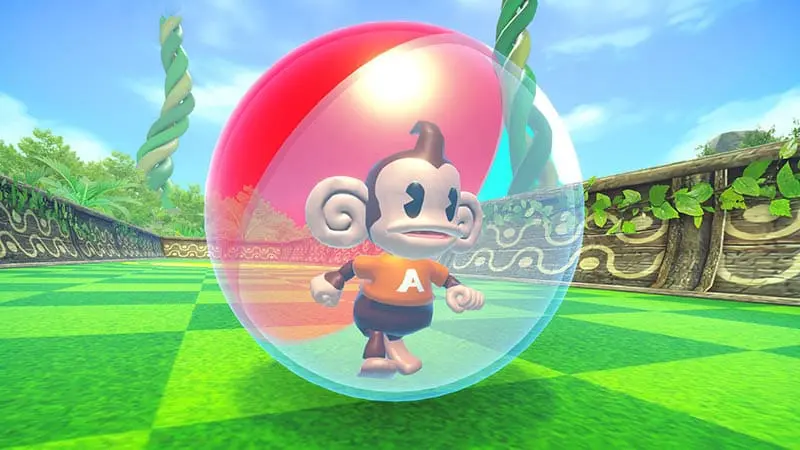
Super Monkey Ball Banana Mania looks cheerful, but its later stages can become some of the most stressful challenges on this list. Instead of moving AiAi directly, you tilt the entire stage and use momentum to roll toward the goal.
That control method makes every narrow platform and sharp turn feel dangerous. Early levels explain the physics gently, while later courses expect careful speed control and increasingly precise corrections. Banana Mania collects more than 300 stages from Super Monkey Ball, Super Monkey Ball 2 and Super Monkey Ball Deluxe, so the difficulty rises gradually rather than throwing everything at you immediately.
The package also includes 12 mini-games such as Monkey Racing, Bowling, Soccer and Baseball. Not every mini-game feels equally refined, but the combination of demanding solo stages and light local competition gives Banana Mania plenty of arcade value.
Capcom Fighting Collection 2
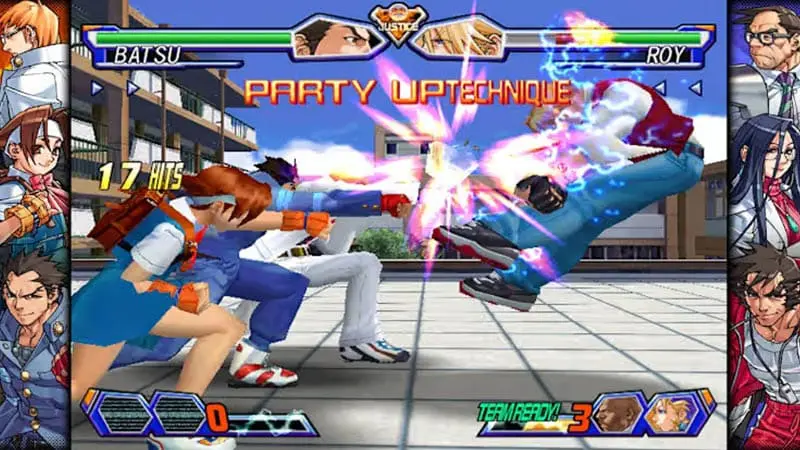
Capcom Fighting Collection 2 is more varied than its name makes it sound. Instead of filling the package with similar 2D fighters, Capcom included traditional fighting games, arena-based experiments and several releases that had become difficult to play legally on modern systems.
Capcom vs. SNK 2 remains the strongest competitive option, with six Groove systems that change defensive tools, movement and meter use. Power Stone and Power Stone 2 move in a completely different direction, allowing players to run around 3D arenas, grab objects and fight over the stones required for transformations.
Rollback online play, training modes, adjustable difficulty and one-button special moves make the older games easier to approach. Because each entry has its own rhythm, the collection works for serious matches and gloriously messy evenings with friends.
Gradius Origins
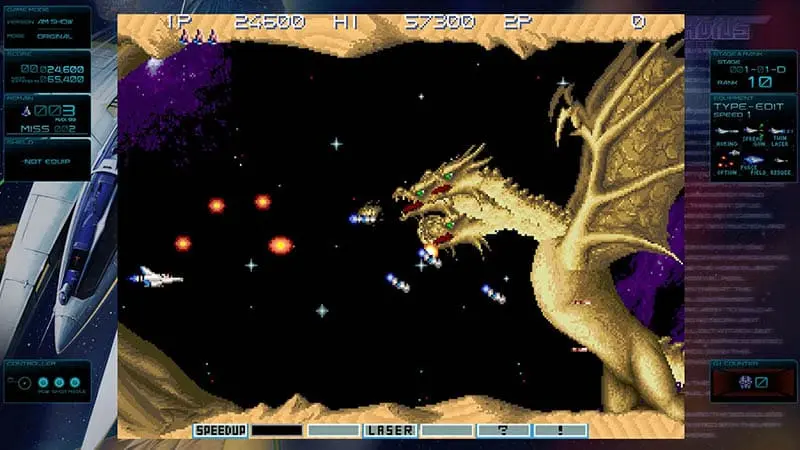
Gradius Origins is the toughest game collection here, but it is also one of the most carefully assembled. The package contains seven arcade games across 18 regional versions, including Gradius, Salamander and the newly developed Salamander III.
Gradius uses a distinctive upgrade bar that lets you decide when to spend collected capsules on speed, missiles, lasers, shields or Options. Saving for a stronger upgrade can leave your ship vulnerable, while spending too early may limit your firepower later. That constant decision-making gives the series more depth than simply memorising enemy formations.
Rewind, quick saves, training options, easier settings and reduced collision choices make the collection less punishing for newcomers. The original difficulty is still there, but learning a difficult section no longer requires replaying the entire game first.
Cruis’n Blast
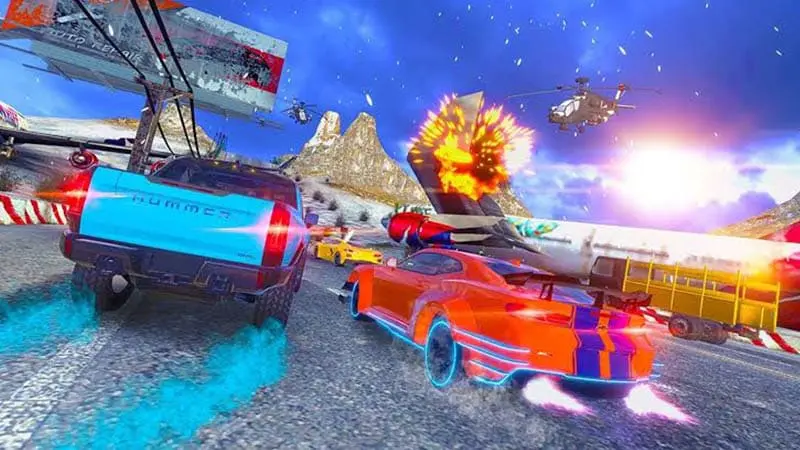
Cruis’n Blast has no interest in realistic racing lines or careful vehicle tuning. Its races are loud, fast and proudly ridiculous, with collapsing roads, dinosaurs, explosions and shortcuts appearing almost faster than the game can introduce them.
Drifting provides extra speed, while aggressive collisions and takedowns encourage you to treat other cars as moving obstacles. The Switch release includes nearly 30 tracks and 23 vehicles ranging from licensed supercars to monster trucks and unicorns. Four-player split-screen support also makes it one of the better local racing options on the system.
The lack of online multiplayer is difficult to ignore, especially in 2026. Still, Cruis’n Blast works because every race is short, readable and packed with spectacle. It feels less like a traditional console racer and more like an arcade cabinet that somehow escaped into your living room.
Which Arcade Game Should You Play First?
Ninja Gaiden: Ragebound and Gradius Origins are the strongest choices for players who enjoy repeating difficult stages until every movement feels natural. Guilty Gear -Strive- and Capcom Fighting Collection 2 are better starting points for competitive matches, while Shredder’s Revenge and Contra: Operation Galuga work particularly well for local co-op.
Cruis’n Blast and Super Monkey Ball Banana Mania are easier to introduce to a mixed group because their basic controls take only a few minutes to understand. Marvel vs. Capcom Fighting Collection and Street Fighter 30th Anniversary Collection, meanwhile, provide the largest selection of traditional arcade fighting games.
The best arcade games on Nintendo Switch and Switch 2 succeed for the same reason the original arcade releases did: they are easy to start, difficult to master and always leave enough room for one more attempt.

