

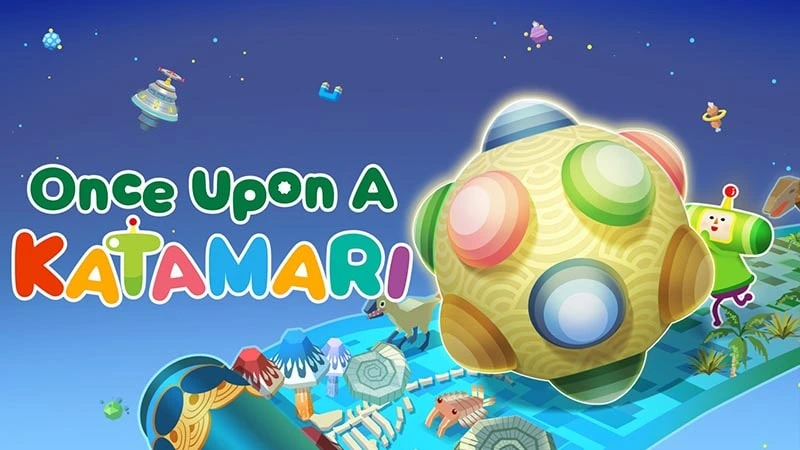
Once Upon a Katamari is a sequel that updates the series without breaking its core and plays comfortably on Switch. You start with a small ball, grow by collecting objects, and complete stage objectives. This time, the “time” theme drives the game: prehistoric era, Edo period, ice fields, the Wild West… As the setting changes, so do object placement, speed, and risk. In short, the formula is the same; the surroundings are richer.
Story
After one of the King’s mishaps, the order of the universe is disrupted; as the Prince, we roll up whatever’s broken with our katamari. The narrative moves forward with short scenes and one-liners. The tone is still humorous but measured. The game rarely falls into the trap of “let’s be funny and insert unnecessary long cutscenes”; the rhythm is preserved. Katamari’s unique strangeness remains, but the story doesn’t overshadow the gameplay.
Gameplay
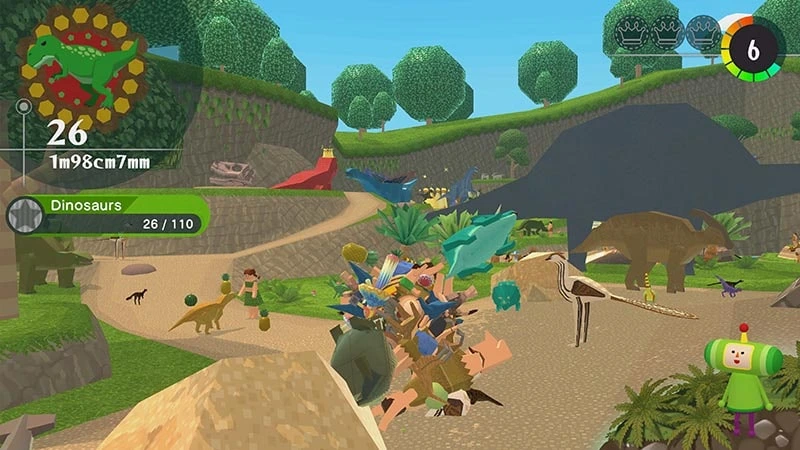
Start → Growth: You begin with small objects and, as you grow, move on to medium and large ones. Stage goals are sometimes “reach a certain size,” sometimes “collect as much as you can from this category.”
Time and route management: Most stages are timed. Choosing the right starting route (beginning in areas dense with small items, avoiding bottlenecks) and moving to new areas as you grow is important.
New assists: Simple aids that pull in nearby small items (e.g., magnet-like collection moments) prevent the tempo from dropping; not a revolution, but a quality touch.
This structure fuels the “one more stage” impulse well. Even if you fail, it’s easy to see where you lost time: wrong route, going for big items too early, unnecessary collisions… On the next attempt, you have a concrete plan.
Controls
The classic twin-stick scheme remains. There’s a 10–15 minute learning curve; after that, turning the ball, accelerating/braking, and quick directional changes become fluid. The new simplified control option is good for accessibility; for precise maneuvers, the classic layout is still clearer. Both schemes are comfortable in handheld mode.
Level Design and the Effect of “time”
The time theme doesn’t just change appearances; it also affects the gameplay rhythm:
- Prehistoric / Ice: Wider, less obstructed areas; it’s easy to build speed, but the density of small, target-appropriate items fluctuates. Slippery surfaces don’t forgive mistakes; angle management matters.
- Edo: Narrow streets and shopfront knick-knacks; if you grow patiently and then open into the festival area, you pick up momentum.
- Wild West: Wide sightlines and running toward distant targets feel good; but there’s a risk of “wandering empty” between open spaces.
- Hybrid stages: Some levels mix motifs from two periods, making route decisions more interesting.
Placement is generally fair. When you struggle, a small route adjustment often “clicks” things into place. It leans more on reading the environment than on memorization.
Customization and Performance
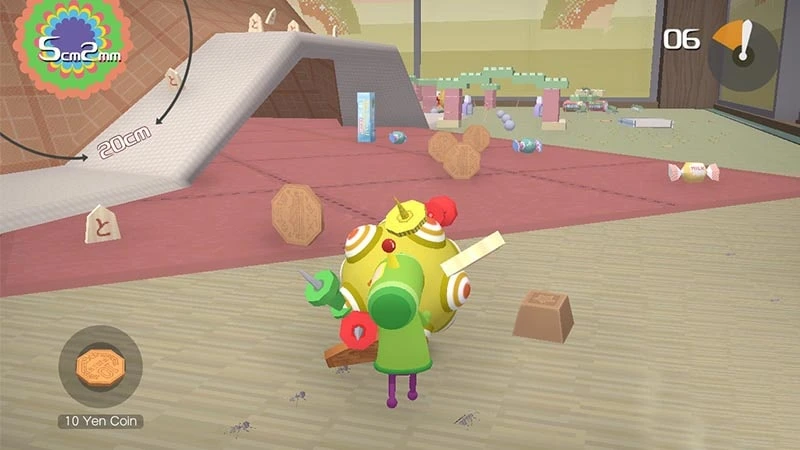
Once Upon a Katamari offers a balanced package on the customization and technical fronts: with outfits, facial expressions, and cousins, the collection side is sufficiently broad; cosmetics keep the “I’ve met the objective but I’ll roam a bit more” motivation alive, and the unlock pace is reasonable without wasting rewards. Visually, the series’ simple yet readable style works very well on Switch; even when the screen gets busy, it’s easy to pick out important objects, the color palette is clear, and the lines are clean. On the music side, energetic, memorable tracks add subtle touches to the period themes, and the effects reinforce the feel of collecting.
This audiovisual balance carries the game’s “relaxing chaos” vibe. On the performance front, flow is generally stable in both handheld and docked modes; brief dips in the busiest moments aren’t enough to harm gameplay. Load times are reasonable, and retries don’t feel tiring. Rumble feedback on the Joy-Con is on point, and precise maneuvers feel a notch better with the Pro Controller.
Cons
- Control learning curve: The twin-stick setup can be confusing in the first minutes. The learning curve is short but present.
- Rule-heavy objectives: Some restricted objectives briefly interrupt the relaxed flow. Follow-up, freer stages balance this out, but it’s noticeable.
- KatamariBall depth: Fun, but not layered enough to sustain long-term competitive play.
Pros
- A satisfying growth feel that preserves the series’ core and stays fluid
- Scenes enriched by the time theme and a changing rhythm
- Small quality touches that smooth out slow points
- Clean performance and clear readability on Switch
- Cosmetic/collection progression that motivates even in short sessions
Conclusion
Once Upon a Katamari is an example of “updating the old formula with the right restraint.” Enthusiasm for the new, respect for the old. Its stages, retry appetite, and portable comfort make it one of those “one more stage tonight” games. There are flaws, but the strengths are clear: fluid growth feel, balanced difficulty, scene variety, and a trouble-free experience on Switch.
Score: 8/10.
“Collecting things shouldn’t be this satisfying; yet it is.”

