

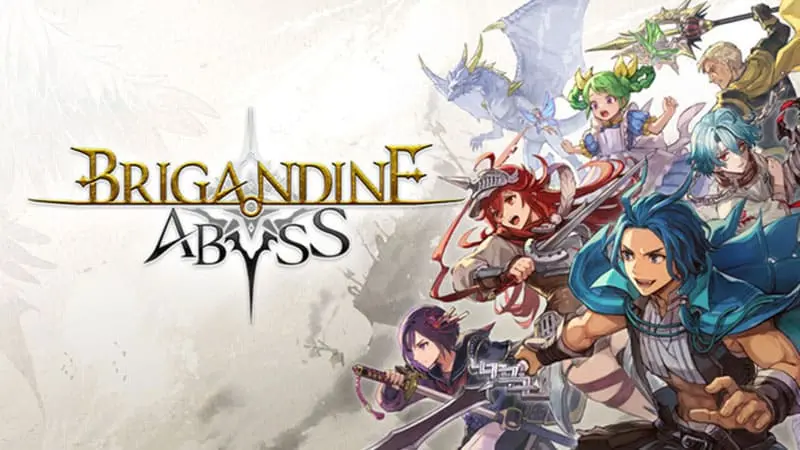
Brigandine Abyss does not waste much time before handing you an entire country and asking what you plan to do with it. Armies need leaders, borders need protection, monsters need training, and neighboring nations rarely stay quiet for long. It is a much broader style of strategy RPG than a simple sequence of tactical battles.
That scale is also the source of both its biggest strengths and its most noticeable problems. Brigandine Abyss can be incredibly satisfying once its systems start working together. However, getting there requires patience with menus, long battles, and a structure that can become repetitive.
A Continent at War
The story takes place on Meltitea, where the return of the Abyssloa Empire throws the continent into conflict. General Chaossolus steals the powerful Brigandine armor, murders the ruler of Solginat and begins a new campaign of conquest.
Story Mode allows players to follow six different nations. Each has its own leaders, motives and position on the map. More importantly, choosing another nation changes more than the faces appearing between battles. Starting territory, available commanders and surrounding threats can push a campaign in a different direction.
You also do not need to know the previous Brigandine games. Abyss tells a standalone story and introduces its rules without relying heavily on earlier events. That makes it a reasonable starting point for anyone discovering the series for the first time.
The writing itself is less impressive than the setup. There are plenty of characters and political conflicts, but some story routes struggle to maintain the same level of momentum. The world is interesting enough to support the strategy, although the narrative rarely becomes the main reason to continue playing.
Managing a Kingdom Matters as Much as Winning Battles
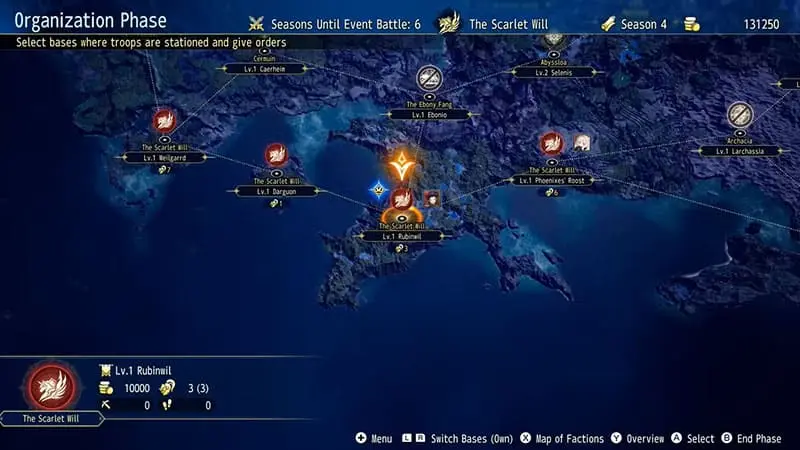
Most of the game revolves around two connected layers.
Before fighting, the Organization Phase lets you arrange armies, manage bases, assign equipment and decide what your leaders should be doing. Commanders can also leave on quests to search for items, resources and other rewards. Sending someone away has a cost, however, because that character will not be available for an immediate battle.
Those small decisions quickly become important. Expanding too aggressively can leave another border exposed. Keeping every strong commander on the front line can slow down development elsewhere. Even a successful invasion can create a new problem because you suddenly have another territory to defend.
It gives Brigandine Abyss a satisfying strategic rhythm. A battle is rarely isolated from everything around it. What happens on the tactical map affects what becomes possible on the larger campaign map.
Monsters Give Every Army Its Own Identity
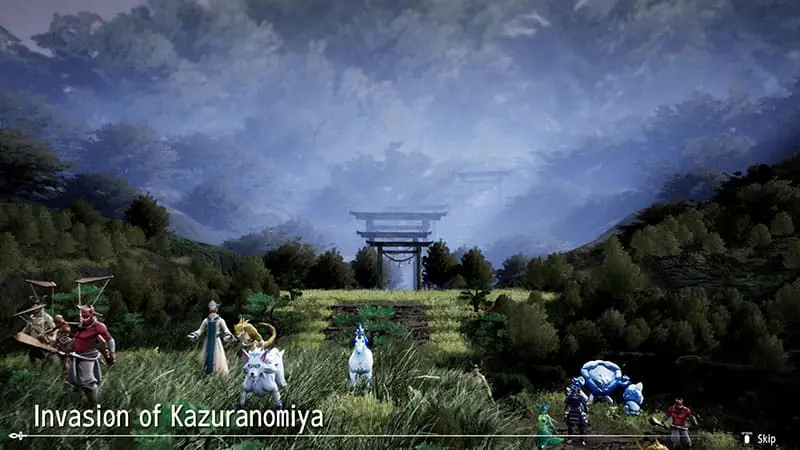
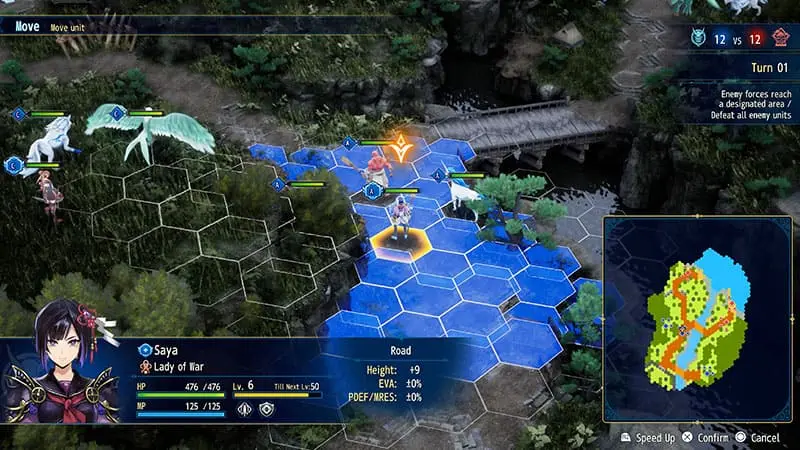
The actual battles take place on hexagonal maps and use traditional turn-based movement. Leaders form the backbone of each force, while monsters fill out the rest of their squads.
The monster selection is one of the most enjoyable parts of the game. Dragons, golems, unicorns and many other creatures can join an army, while different classes and abilities make team composition more important than simply filling every available slot.
Positioning also matters. The Zone of Control system limits movement around enemy units, making it difficult to casually walk through a defensive line. Terrain and unit placement can therefore decide whether an attack succeeds before the strongest abilities even come into play.
There is another tactical wrinkle. Defeating a leader can force the monsters under that command to withdraw as well. Instead of slowly eliminating every creature on the field, finding a route toward an enemy commander can completely change the battle.
When these systems work together, Brigandine Abyss is at its best. Building an army and then watching that formation survive a difficult fight gives progression a real sense of purpose.
Presentation Falls Behind the Strategy
Unfortunately, the visual side rarely matches the complexity underneath it.
Character artwork is attractive, and several environments contain a surprising amount of detail. The overall presentation is much less consistent. Basic combat animations lack impact, some character models feel plain, and the menus occasionally require more navigation than they should.
None of this ruins the strategy. It simply makes Brigandine Abyss feel less polished than its strongest ideas deserve.
That contrast appears throughout the game. There can be a genuinely interesting decision hidden behind an interface that makes reaching it slightly more cumbersome than necessary.
Brigandine Abyss Review: The Verdict
Brigandine Abyss is built for players who enjoy managing a war rather than simply winning individual battles.
Its combination of territorial expansion, army management and monster-based tactical combat gives it an identity that few modern strategy RPGs share. Mission Mode adds considerable replay value, while six Story Mode factions provide plenty to explore before even reaching it.
The weaknesses become harder to ignore during longer campaigns. Repetitive battles, inconsistent AI and an underwhelming presentation keep the game from turning its strong foundation into something exceptional.
Still, there is real depth here. Players willing to learn its systems can spend hours adjusting armies, protecting borders and finding better ways to conquer Meltitea.
Brigandine Abyss may not be the easiest strategy RPG to recommend to everyone, but for the right player, its complicated little war machine can become very difficult to put down.
Score: 7/10

