

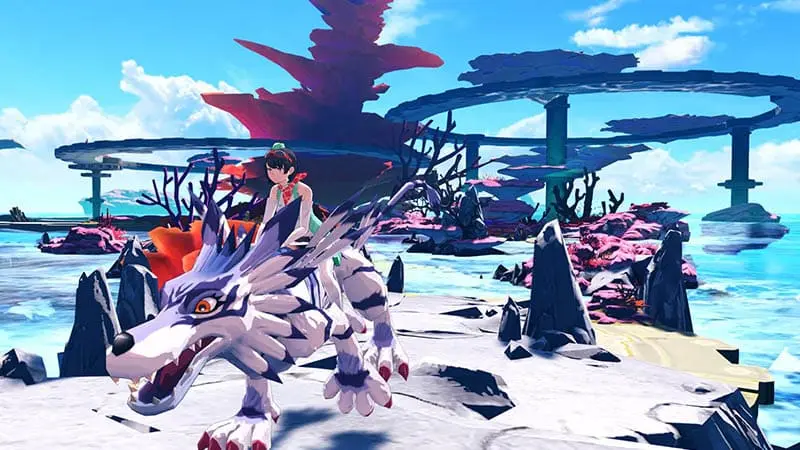
Digimon Story Time Stranger gives you hundreds of Digimon to collect, branching evolution paths to explore and several systems that are not fully explained during the opening hours. Building a strong team involves more than choosing your favourite monsters and increasing their levels. This Digimon Story Time Stranger beginner’s guide explains how Scan Rate, Digivolution, Personality, Agent Skills and the DigiFarm work. These tips will help you avoid wasting resources while giving you enough freedom to build the team you actually want.
Increase Scan Rate
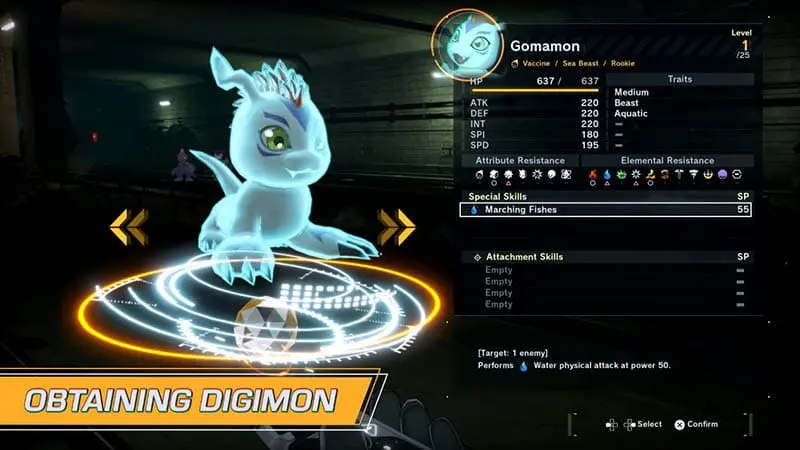
Defeating enemy Digimon increases the Scan Rate for that species. Once you have collected enough data, you can use Convert to create the Digimon and add it to your collection.
There is no need to convert every Digimon as soon as the option becomes available. Continuing to fight the same species can provide better starting conditions when you eventually create it. This matters most for Digimon that you plan to keep in your main team.
You can be less selective with Digimon collected for experimentation or future training. Saving the highest Scan Rates for important team members keeps the process useful without turning every area into a long farming session.
Build a Flexible Team

A team made entirely from your favourite Digimon can work during normal encounters, but tougher battles require more flexibility. Digimon have different attributes, elemental strengths, resistances and available skills.
Keep several options ready instead of relying on the same three attackers. A Digimon that performs poorly in one area may become extremely useful against an enemy with the right weakness.
Your reserve members are therefore part of the team rather than spare creatures waiting in storage. Rotate them when the enemies in a new area begin resisting your usual attacks.
Plan Digivolution
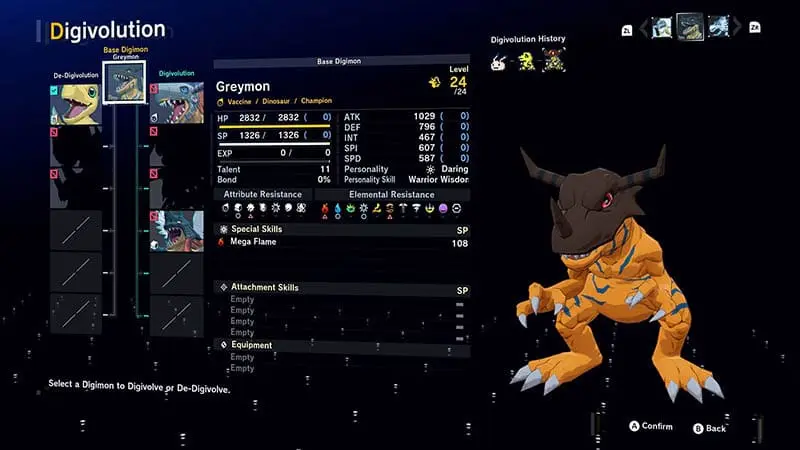
Digivolution does not depend on level alone. Some forms require particular stats, sufficient Talent or progress tied to your Agent Rank. Check the listed requirements before spending time developing a Digimon in the wrong direction.
You also do not need to choose the first available form. Each Digimon can lead into different branches, and the quickest evolution is not always the one that fits your team.
Decide whether you need physical damage, magical skills, healing or additional elemental coverage. Choosing Digivolution paths around a role produces a more useful team than simply chasing the largest Digimon on the screen.
Use De-Digivolution
Returning a Digimon to an earlier form may look like lost progress, but De-Digivolution forms an important part of long-term development. It lets you explore another branch and continue improving a Digimon beyond the limits of a single evolution path.
You do not need to repeat this process constantly during the beginning of the game. Use it when you want a different evolution, need to improve Talent or have reached a development limit with your current form.
Levels can always be earned again. A better evolution route and stronger long-term growth usually matter more than preserving a few early levels.
Watch Personality
Personality is not merely a description of how a Digimon behaves. It influences stat growth and can therefore affect which Digivolution requirements become easier to reach.
Before changing a Digimon’s Personality, look at the stats required for your intended evolution. A development style that benefits one Digimon may push another away from the form you are trying to unlock.
There is no single best Personality for the entire game. Its value depends on the Digimon, its planned role and the evolution branch you want to follow. Treat it as part of your build rather than a universal ranking.
Spend Agent Points Carefully

Completing missions also develops the player character. Agent Skills provide passive benefits connected to training, stats and other parts of Digimon development.
Avoid spending points simply because a skill is immediately available. Read further along each path and consider whether its bonuses support your current team. Early points feel much more valuable when they improve systems you already use.
You do not need to create a perfect build during the opening hours. However, spreading points across unrelated branches can delay upgrades that would have made an immediate difference.
Use the DigiFarm

The DigiFarm gives inactive Digimon a purpose while your main party continues through the story. As part of this Digimon Story Time Stranger beginner’s guide, it is one of the most useful systems to understand early. You can train Digimon, develop selected stats and increase Bond without placing every creature in active combat.
This makes the farm particularly useful when a Digimon is close to meeting an evolution requirement. Instead of rebuilding your entire party around one missing stat, place that Digimon in suitable training and continue with other missions.
Check the DigiFarm regularly rather than treating it as permanent storage. Completed training does nothing for you while it sits unnoticed in a menu. Even digital monsters appreciate being collected on time.
Build Bond
Bond becomes increasingly important as you develop your Digimon. You can improve it by fighting together, interacting with your partners and using features available in the DigiFarm.
Higher Bond supports your Digimon in combat and plays a role in the wider development system. It is therefore worth keeping important team members involved instead of replacing the entire party whenever you obtain something new.
This does not mean you should never experiment. Maintain a core group while rotating a few open positions for newly converted Digimon.
Keep Useful Skills

A Digimon’s value is not determined only by its raw stats. Skill combinations can cover elemental weaknesses, provide healing or give your team useful support options.
Avoid filling every available slot with similar attacks. A powerful move becomes much less impressive when an enemy resists its element. Giving a Digimon at least one alternative can prevent an easy encounter from becoming needlessly slow.
Support skills also deserve space. Healing, buffs and enemy debuffs may feel unnecessary against normal opponents, but they become far more valuable during longer battles.
Do Not Chase Everything
With more than 450 Digimon available, trying to build every possible evolution immediately will slow the game to a crawl. Choose a manageable group, explore their branches and expand your collection naturally as new areas introduce different species.
You will not ruin your playthrough by choosing an imperfect evolution or spending time with a Digimon that later leaves the main party. The game encourages experimentation, including moving backwards through evolution paths and rebuilding Digimon for different roles.
The best early team is not necessarily the one with the rarest members. It is the team that covers several enemy types, provides reliable support and gives you room to test new Digivolution routes.
Final Tips
The most useful lesson in this Digimon Story Time Stranger beginner’s guide is to plan without becoming obsessed with perfection. Increase Scan Rate before converting important Digimon, check evolution requirements in advance and use the DigiFarm to solve specific development problems.
At the same time, leave room to experiment. Digivolution is built around branching paths rather than a single correct answer. A Digimon that does not fit your team today may become exactly what you need after one carefully chosen evolution.

