

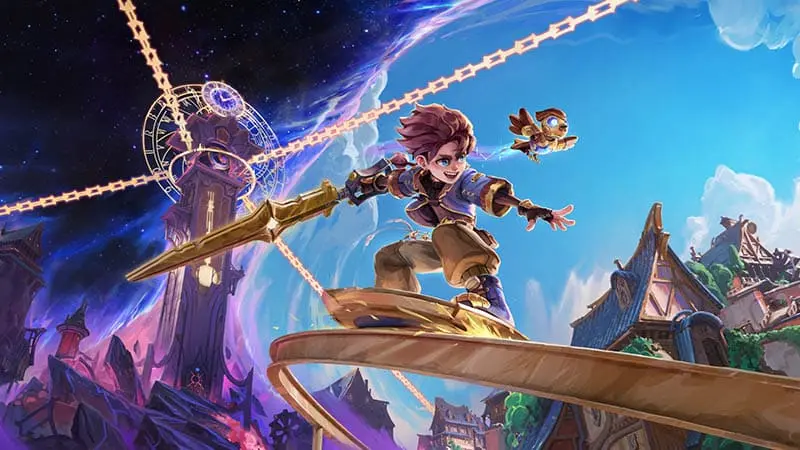
The Duskfade Switch 2 preview footage immediately brings to mind an era when 3D platform games were not afraid to combine movement, combat and imaginative worlds. Developed by Weird Beluga Studio and published by Fireshine Games, Duskfade is scheduled to launch on August 13, 2026, for Nintendo Switch 2, PlayStation 5, Xbox Series X|S and PC. A version for the original Nintendo Switch has not been announced.
Although its colourful environments may initially suggest a straightforward platformer, Duskfade places just as much emphasis on fast combat and traversal abilities. Zirian can jump, dash, grapple and glide across its stages while fighting enemies without completely breaking the pace of exploration. The result looks closer to the action-platform adventures of the PlayStation 2 era than a traditional obstacle course built around isolated jumping challenges.
A playable demo is currently available on PC and PlayStation 5, but the Switch 2 edition has not received its own public demo. This means the game’s general design can already be evaluated, while Nintendo-specific performance and image quality remain unknown.
A World Trapped in Eternal Night
Duskfade follows Zirian, a young workshop apprentice whose sister has been taken by a mysterious Clock Tower. The same event has damaged the flow of time and trapped the surrounding world in eternal night. Accompanied by a mechanical cuckoo, Zirian travels through several realms while searching for his sister and uncovering the secrets of the Master Clockmakers.
The premise gives the developers a clear visual foundation. Giant clock mechanisms, floating machinery and mechanical structures appear throughout the environments, while the passage of time remains connected to both the story and the world itself.
Duskfade is not trying to build a realistic fantasy setting. Its environments use bright colours, exaggerated architecture and stylised characters that remain easy to read during fast movement. Promotional footage has shown forests, underwater locations, desert areas, coastal settlements and platforms positioned above the clouds.
Each area appears to have its own traversal ideas rather than existing only as a different background. That variety will be important because a movement-focused game can lose momentum quickly when several stages rely on the same jumps and hazards.
Platforming Is the Main Attraction
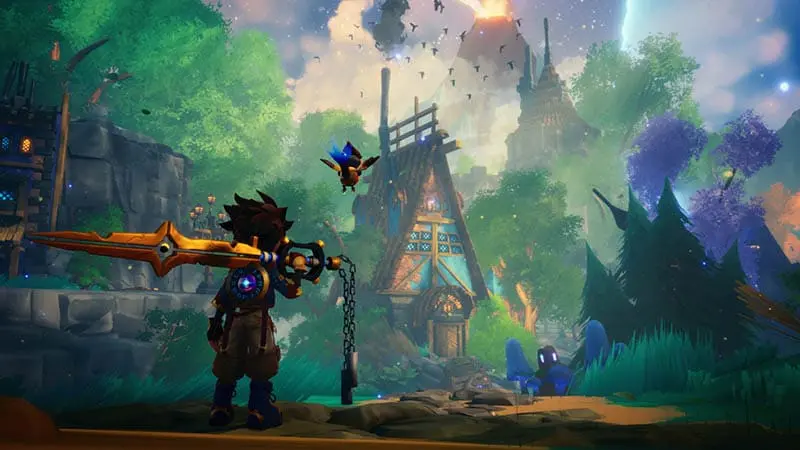
The strongest part of Duskfade so far is Zirian’s movement set. He can chain standard jumps with air dashes, gliding and grappling, allowing him to cover long distances without constantly returning to the ground.
These abilities are not limited to reaching obvious platforms. The stages contain suspended rails, grapple points, moving objects and routes that ask players to combine several actions in quick succession. When everything connects correctly, Zirian can pass through a section with very little interruption.
This structure should appeal to players who enjoy learning a character’s movement rather than waiting for the game to move platforms into position. The challenge appears to come from controlling momentum and selecting the right ability at the right time.
The official demo contains a condensed version of the first level, designed to introduce the platforming and combat before ending with a boss fight against Wrath. The developer has also expanded the demo with additional locations, non-player characters, story material, four difficulty settings and four biomes.
The difficulty options are a useful addition for this type of game. Duskfade wants its movement to feel fast, but not every player approaching a colourful 3D platformer will want demanding timing from the beginning. Multiple settings may allow the game to preserve more advanced platform sequences without closing the door on younger or less experienced players.
Combat Keeps Zirian Moving
Duskfade combines its platforming with real-time melee combat. Zirian uses a large bladed weapon and can perform quick ground attacks, aerial strikes and launchers that send enemies into the air.
More importantly, his movement abilities remain relevant once a fight begins. Dashing can close the distance to an enemy or avoid an incoming attack, while aerial movement allows Zirian to continue a combination above the ground. Grappling also appears to help him reposition during larger encounters.
This creates a better connection between exploration and combat than simply locking the player inside a small arena. Zirian does not suddenly become slower when enemies appear; the same abilities used to cross the environment remain part of the fight.
The visual similarities to Kingdom Hearts are difficult to miss, particularly in the oversized weapon, airborne combos and dark enemy designs. However, Duskfade seems more interested in dedicated platforming challenges than many action RPGs with comparable combat. Jak and Daxter, Ratchet & Clank and Super Mario Galaxy are also useful points of comparison, although Duskfade combines those influences rather than following any one of them directly.
Combat still presents one of the game’s biggest unanswered questions. The available material shows basic enemies and large bosses, but it does not reveal how much Zirian’s move set develops across the full adventure. A strong upgrade system or a wide variety of enemy behaviour would help prevent the battles from becoming repetitive between platforming sections.
Boss Fights Have More Than One Purpose
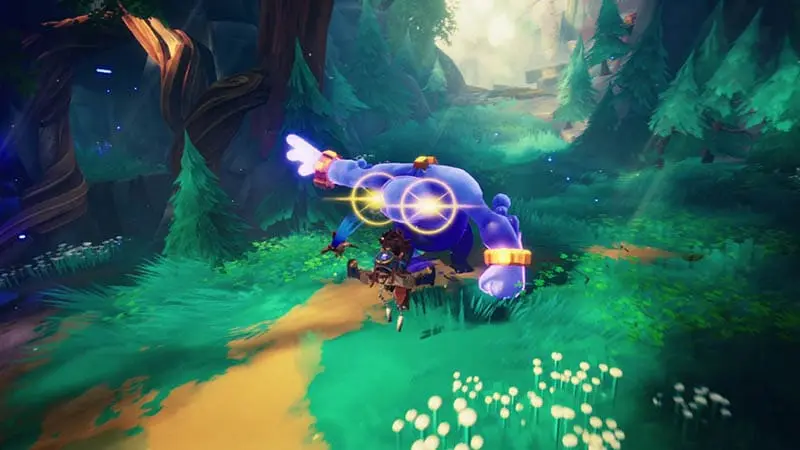
The first major boss shown in the demo is Wrath, a creature connected to the fears Zirian must overcome. This reflects the broader narrative direction, in which enemies represent emotional obstacles rather than functioning only as monsters placed at the end of a stage.
That approach could give Duskfade’s bosses more personality, especially if each confrontation combines movement challenges with combat. Large enemies are often at their best in platform games when players must read the arena, avoid environmental hazards and find short opportunities to attack.
Early footage suggests Duskfade is moving in that direction. Boss encounters include large attacks, aerial movement and moments where positioning matters as much as dealing damage.
The final quality of these fights will depend on mechanical variety. Spectacle alone will not carry an entire campaign, but the game already has enough traversal tools to support creative boss designs.
How Does Duskfade Look on Switch 2?
Duskfade was first announced for PC, PlayStation 5 and Xbox Series consoles. The Switch 2 version was confirmed later with the August 13 release date.
The publisher has not revealed the Switch 2 resolution, frame rate, graphics modes or file size. There is also no public Switch 2 demo. For that reason, PC and PlayStation 5 footage should not be used to judge Nintendo performance.
The stylised art direction may suit the system well. Characters and environments use strong colours and clean shapes instead of realistic textures. Even so, Duskfade includes large areas, dense effects and fast camera movement. A stable frame rate will therefore be important.
Platform games depend on responsive controls and predictable movement. Frame-rate drops would be easy to notice during difficult jumps or aerial attacks. Switch 2 performance remains one of the main areas that still needs testing.
Handheld play could become one of this version’s biggest strengths. The stage-based structure appears suitable for shorter sessions. Clear text, comfortable controls and sensible checkpoints will still matter on the smaller screen.
Is Duskfade Open World?
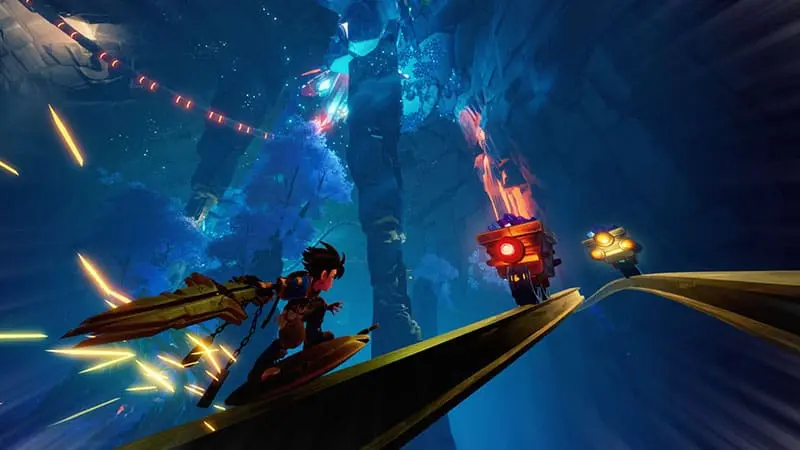
Duskfade should not be described as a fully open-world game. Its adventure is divided into distinct realms and themed areas, each containing platforming routes, characters, secrets and combat encounters.
The locations may offer room for exploration, but the game is structured around designed stages rather than one continuous map. That approach is probably the better fit for its movement system. Carefully placed grapple points, rails and hazards can produce stronger platform sequences than an enormous environment filled with empty travel time.
Players should expect exploration within individual areas, including hidden routes and collectibles, rather than unrestricted movement across a single world.
Early Verdict
Duskfade looks like one of the more distinctive third-party platform games currently heading to Switch 2. Its appeal does not come only from recreating the atmosphere of older 3D adventures. The combination of grappling, gliding, air dashes and fast melee combat gives it a clear mechanical identity.
The colourful clockwork world also helps it avoid feeling like a basic imitation of Kingdom Hearts or Jak and Daxter. Its inspirations are visible, but the increased focus on continuous platform movement may allow it to stand on its own.
Several questions remain. The full game needs enough enemy types, upgrades and stage mechanics to support its movement across the entire campaign. The story must also give its emotional themes room to develop without slowing down the platforming. Most importantly for Nintendo players, the Switch 2 version still needs a proper technical demonstration.
Based on the footage and demo available on other platforms, the foundation appears promising. Duskfade understands that satisfying movement is the heart of a strong 3D platformer, and it builds its combat around that idea instead of treating traversal as a break between fights.
The Duskfade Switch 2 preview leaves a positive first impression, but the quality of the Nintendo edition will ultimately depend on responsive controls and stable performance when the game arrives on August 13, 2026.

